
How to Pack a Living Room for Moving in Vancouver: Expert Packing Tips
The living room isn't just the heart of your home—it is often the financial heavyweight of your move. It is a magnet for your bulkiest, most difficult-to-handle furniture, alongside highly fragile, expensive electronics. A single clumsy pivot with a heavy sectional down a tight Vancouver's apartment building staircase, or a poorly wrapped $2,000 OLED TV, can turn moving day into an incredibly costly disaster.
Whether you're navigating the restrictive elevators of a downtown high-rise or moving out of a spacious family home in Surrey, packing your living room requires a clear, step-by-step plan to keep your things safe.
Here at Eco Van Move, we have relocated hundreds of living rooms across Metro Vancouver. We are sharing our exact, professional workflow for protecting your screens, preserving your media collections, and getting your most heavily used room safely to your new home.
Quick Summary
Living Room Packing at a Glance
- Time Required: 5 to 8 hours for a standard DIY pack.
- Cost of DIY Supplies: $100 to $150 (Specialty TV boxes, heavy-duty moving blankets, bubble wrap, and small book boxes).
- Risk Level: High. Maneuvering heavy furniture and delicate electronics through tight spaces significantly increases the risk of property damage or personal injury.
Note: At Eco Van Move, we carry up to $2 million in liability coverage for residential damages, giving you complete peace of mind. Learn more about how this protects you in our BC moving insurance guide.
Phase 1: Electronics
Phase 1: Preparation and Fragile Electronics
Declutter and Source Your Supplies
There is no point in paying to move worn-out throw pillows or furniture that won't fit your new floor plan. Before you pack, review our guide on how to declutter before moving. Once edited, gather your materials: small boxes, telescopic TV boxes, unprinted packing paper, and furniture pads. Unsure of quantities? Check our packing supplies checklist.
How to Pack Flat-Screen TVs and Audio
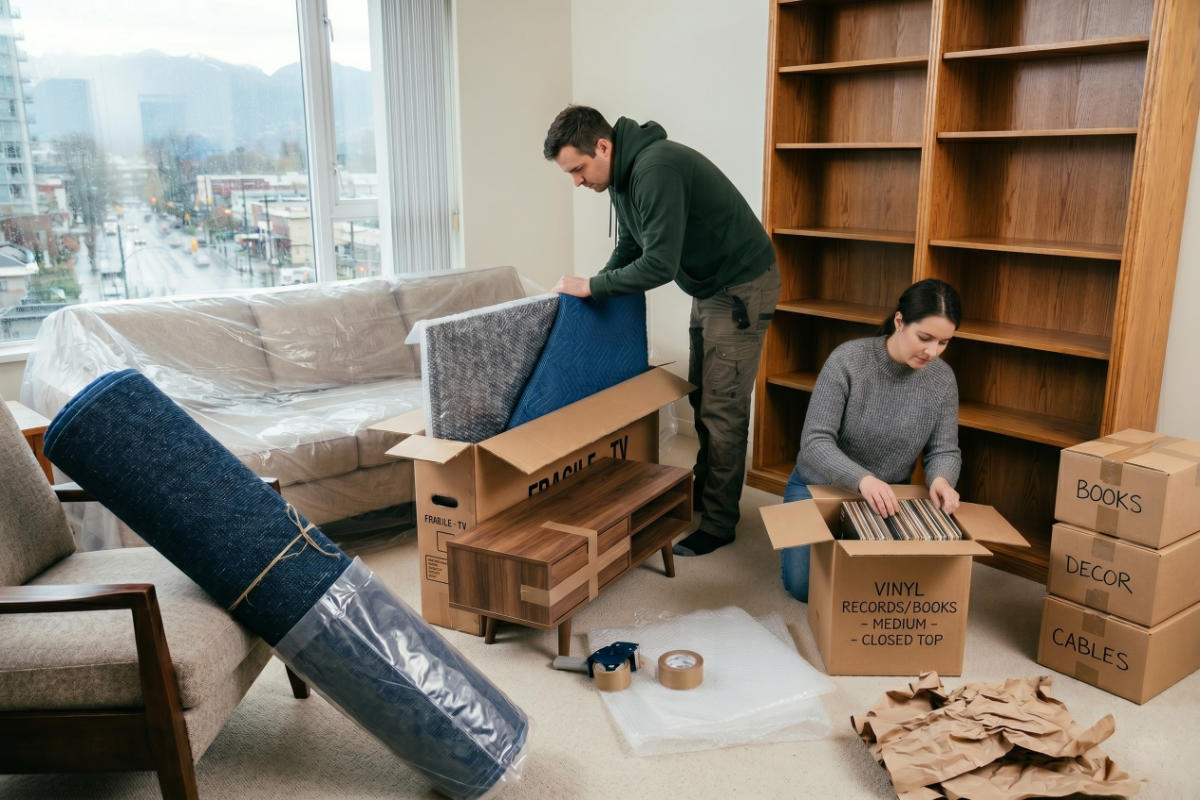
The safest way to move a television is in its original box with the factory foam inserts. If you no longer have it, use a specialized TV moving box. Wrap the screen in a protective foam sleeve or quilted moving blanket, and always keep the TV upright. Laying a flat-screen flat causes the glass to crack under its own weight. For deep dives into screen protection, see our guide on packing electronics and TV screens.
Quick Tip: If the thought of wrapping up a custom home theater or a massive OLED TV makes you nervous, our Residential Relocation crews are trained to professionally pack and transport high-value electronics safely.
Phase 2: Furniture
Phase 2: Heavy Media and Large Furniture
Packing Books and Vinyl Records Vertically
The biggest mistake DIY packers make is filling a large box with books. It becomes dangerously heavy and is prone to breaking open. Use small boxes, and pack both books and records exactly as they sit on a shelf—vertically. Laying records flat will cause them to warp under the weight, and stacking books on their spines can permanently crack their bindings.
Protecting Couches, Tables, and Area Rugs
Your couches, armchairs, and rugs need heavy-duty defense against the dirt, moisture, and scuffs inherent to moving day.
- Area Rugs: Vacuum them thoroughly, roll them tightly (never fold, which causes permanent creases), and secure them with twine. Finally, slide them into a heavy-duty plastic rug cover.
- Upholstered Furniture: Protect couches and chairs with plastic furniture covers and stretch wrap. This prevents stains and tears while navigating tight doorways.
- Wooden Tables: Wrap wooden surfaces and legs in quilted moving pads, secured tightly with moving tape. For complex pieces, review our tips on how to pack fragile furniture.
Phase 3: Common Mistakes
5 Common Living Room Packing Mistakes to Avoid
A single misstep can easily lead to a damaged TV or a ruined antique. Avoid these common DIY mistakes:
- Laying a TV Flat: Flat screens are engineered to distribute weight vertically. Laying them flat in a moving truck guarantees a cracked or completely shattered screen.
- Folding Area Rugs: Folding a rug breaks the backing and creates permanent creases. Always roll your rugs.
- Ignoring Cable Management: Tossing loose cables into a box leads to a frustrating, tangled mess. Always coil cables, secure them with ties, and label them.
- Using Thin Blankets: Flimsy household blankets do not absorb shock. Use proper, quilted moving pads to prevent deep scratches on wood furniture.
- Overpacking Book Boxes: Filling a large box with books creates a 100+ lb hazard that will likely blow out the bottom of the box and injure your back.
Note: Think about renting reusable moving boxes to avoid issues like cardboard boxes breaking down. Our reusable plastic boxes come in two sizes—small and large. The small ones are great for heavy items like books, while the large ones are better for lighter, bulkier items.
DIY vs Professional
The Trade-Off: DIY Packing vs. Professional Movers
The Hidden Costs of DIY
Many Vancouver homeowners try to save money by packing their living room themselves, but it is critical to weigh the actual risks. Properly dismantling entertainment centers and boxing up media collections takes 5 to 8 hours. Quality packing supplies often run between $100 and $150. More importantly, maneuvering a 250-pound sleeper sofa down a narrow condo stairwell without proper straps drastically increases the risk of personal injury or property damage.
Is Professional Relocation Right for You?
Not every move requires a full crew, but you should strongly consider professional movers help if you have high-value electronics, heavy or bulky items, are navigating complex staircases, or are dealing with strict condo elevator booking windows. Hiring experts ensures your household items are wrapped, loaded, and delivered stress free without any hidden risks or cost. Simply text or call us or fill our moving estimate form and we will get back to you in less than 12 hours.
FAQs
Frequently Asked Questions (FAQs)
How do you pack a flat-screen TV for moving?
Always keep the TV upright. Wrap the screen in a foam sleeve or a thick moving blanket, and place it inside a heavy-duty, telescopic TV box. Never lay the television flat, as the pressure can destroy the screen.
What is the best way to pack books and records?
Always stick to small, sturdy containers so they don't become dangerously heavy to lift. You should pack both books and vinyl records vertically (standing on their edges), exactly as they sit on a shelf. Laying them flat can cause records to warp and book bindings to crack. Because media collections are deceptively heavy, we highly recommend renting our plastic reusable moving boxes so you never have to worry about the bottom of a cardboard box tearing open during your move.
How do you protect a couch or sectional during a move?
Remove the cushions and pack them in large, clear bags. Wrap the main body of the couch in a heavy-duty plastic furniture cover, and use stretch wrap to keep the cover tight and prevent tears from doorways or stairwells.
How do I pack large living room mirrors and framed wall art?
Use specialized telescopic picture or mirror boxes. Wrap the entire frame heavily in bubble wrap and stand it vertically inside the box. Never pack mirrors flat, and fill any empty space in the box with crumpled packing paper so the frame cannot shift during the drive.
Should I disassemble my TV stand or entertainment center?
Yes, especially if it is large, heavy, or made of particleboard (which is prone to cracking under stress). Remove all glass doors and shelves, and wrap them separately. Place all screws and hardware in a clear plastic bag and tape it securely to the underside of the main unit. Make sure that your tape isn't too strong which might remove the polish or colour over the surface of tv stand.
How do you safely pack floor and table lamps?
Always separate the components. Remove the lightbulb, harp, and lampshade. Wrap the heavy lamp base in bubble wrap or moving pads and place it upright in a box. Pack the delicate lampshade in its own separate box, using only unprinted packing paper (never newspaper) to prevent ink stains and crushing.
Can I leave items inside the drawers of my living room furniture?
It is highly recommended that you empty the drawers of your coffee tables, console tables, and TV stands before the move. Leaving items inside makes the furniture significantly heavier to lift and drastically increases the risk of damaging the internal drawer tracks during transit.
Need Help with Packing Your Living Room or Moving
Skip the Heavy Lifting and Move with Confidence
Your living room contains some of the most heavily used, emotionally valuable, and expensive items in your home. Don't risk a shattered TV screen, a torn sofa, or an exhausting weekend trying to manage the heavy lifting on your own.
Let our trained professionals handle the logistics and protect your valuables. If you are planning an upcoming move and want to review your options, you can request a moving estimate today to ensure your transition is completely stress-free.
0 comments