
Overview
How to Decide Whether to Donate, Sell, or Use Junk Removal Before Moving
One of the hardest parts of getting ready for a move is deciding what to do with the things you no longer want. Some items may still be worth selling. Others may be useful enough to donate. Some are simply too damaged, worn out, or inconvenient to deal with and are better handled through junk removal.
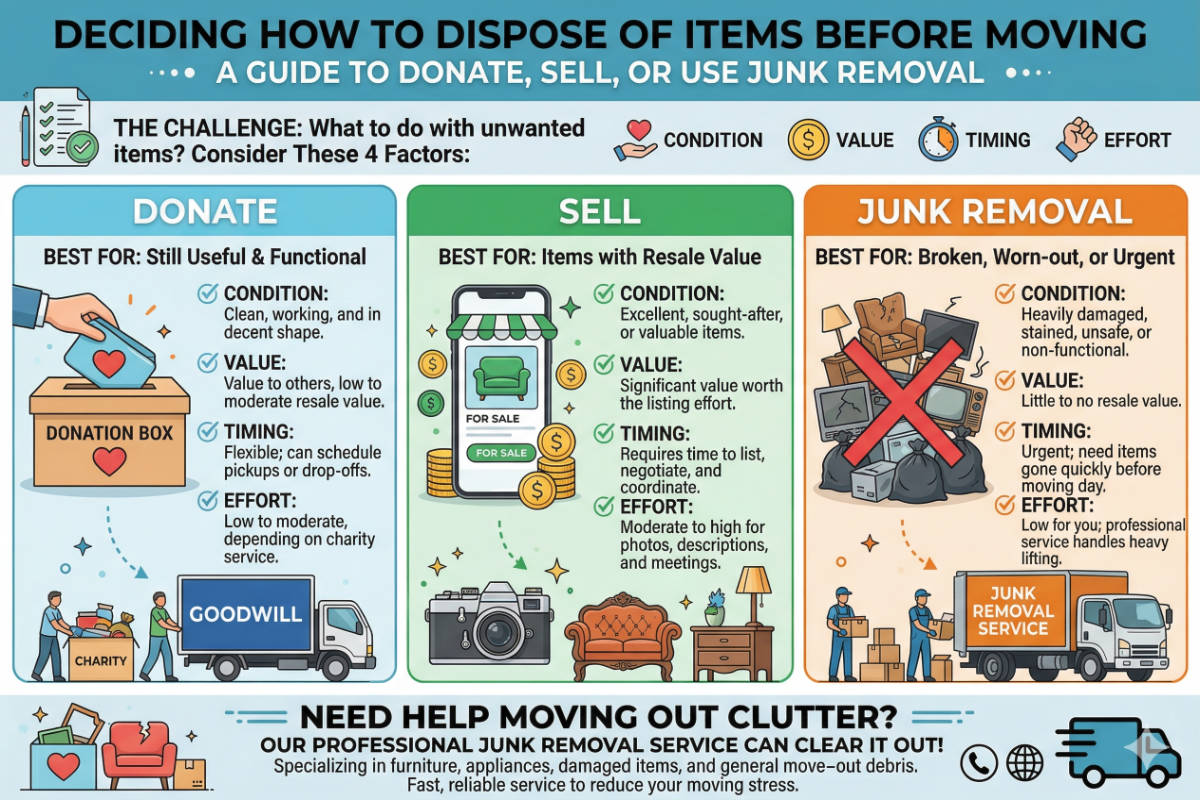
The problem is that many people spend too much time trying to make the perfect decision for every single item. That can slow down packing, create stress, and leave clutter sitting around until the last minute. A better approach is to make decisions based on four things: condition, value, timing, and effort.
If an item is still clean, functional, and useful to someone else, donation may be the right choice. If it has enough resale value to justify the time needed to list it and coordinate pickup, selling may make sense. If it is broken, unsafe, heavily worn, or too urgent to manage another way, junk removal is often the most practical option.
If you need help removing items that are no longer worth keeping, our Junk Removal service can help clear out unwanted furniture, damaged items, and general move-out clutter before moving day.
Decision Framework
A Simple Way to Decide Faster
The easiest way to make faster decisions is to stop asking whether an item might still have some value somewhere and instead ask whether it makes sense for your timeline and situation. This is where a simple decision framework helps.
Start by asking whether the item is usable in its current condition. If another person cannot realistically use it today without repairs, missing parts, or deep cleaning, it usually should not be donated. Then ask whether it has real resale value. Many people overestimate what used household items are worth and underestimate how much time it takes to sell them. After that, ask whether you have the time, transportation, and energy to handle the item properly. Even a good donation candidate can become a burden if you do not have a vehicle, elevator access, or time to coordinate drop-off or pickup.
A useful rule is this: if the item is valuable and in strong condition, try selling it. If it is clean, complete, and still useful but not worth much money, donate it. If it is damaged, unsafe, or too difficult to manage within your schedule, use junk removal and move on.
Selling vs Donation
When to Sell and When to Donate
Selling is usually the better option when an item has meaningful resale value and you have enough time to deal with listings, messages, pricing, and pickup. This often applies to newer furniture, quality electronics, specialty household items, or pieces that still have strong market demand. If the expected return is low, the effort often is not worth it.
Donation is usually the better choice when the item is still clean, functional, and useful, but not valuable enough to justify the time required to sell it. This can include clothing, books, kitchenware, lamps, decor, small furniture, and everyday household goods that still have life left in them.
A helpful test is to ask yourself whether you would feel comfortable giving the item to a family member or close friend. If the answer is no, it is probably not suitable for donation.
What does gently used actually mean?
- Structurally sound and ready to use without repairs.
- Reasonably clean and complete.
- Free of strong odors, mold, or major stains.
- No missing parts, deep gouges, or serious pet damage.
For more ideas on items that may still be useful to others, see our guide on what household items to donate before moving.
Junk Removal
When Junk Removal Is the Most Practical Choice
Junk removal is often the right option when an item is damaged, heavily worn, unsafe, moldy, incomplete, or too bulky to manage easily. It is also the better choice when you are facing a tight moving deadline and do not have time to wait for buyers, donation appointments, or repeated rescheduling.
This is common with worn sofas, damaged mattresses, broken particleboard furniture, soaked materials, old office furniture, and large pieces that are difficult to move safely on your own. In these cases, the goal is not to make the perfect eco-friendly choice for every object. The goal is to clear space safely and keep your move on track.
Before hiring junk removal, ask about:
- Extra charges for stairs.
- Long walking distance to the truck.
- Heavy lifting or oversized item fees.
- Disassembly charges.
- Appliance or electronics handling fees.
- Urgent same-day or weekend service pricing.
These details can affect the final price more than many people expect, so it is worth asking upfront.
If you are dealing with oversized items, you may also find our guide on how to dispose of large furniture helpful.
Environmental & Emotional Considerations
Balancing Sustainability, Time, and Stress
Donation and reuse are usually the better first choice when an item is genuinely usable. Keeping good items out of the landfill helps extend their life and supports a more sustainable move. But sustainability also needs to be realistic. Holding onto broken, dirty, or unusable items out of guilt can create hazards, add stress, and delay your move.
There is also an emotional side to this process. Some items carry memories. Others make people feel guilty because they spent money on them and do not want to let them go for free. During stressful times such as moving, downsizing, or managing a busy family schedule, that pressure can make every decision feel heavier than it should.
In those situations, perfection often slows progress. If selling will take too long, donate. If donation is too complicated, use junk removal. The best decision is often the one that helps you move forward safely and on time.
Sorting Strategy & Final Decision
A Practical Room-by-Room Sorting Method
If the process feels overwhelming, do not try to sort your entire home at once. Work one room at a time and create five categories: keep, sell, donate, recycle, and junk removal. This makes the process easier to see and easier to manage.
A good place to start is with things you use the least, such as duplicate kitchen items, extra decor, old books, spare linens, storage-room contents, and unused furniture. These categories usually involve less emotional resistance and help you build momentum early.
For a fuller pre-move plan, see our guide on how to declutter before moving.
Final Rule of Thumb Before Moving Day
Try selling the item only if it is valuable, in excellent condition, and won't take up too much of your time. If it is clean, functional, and useful to someone else, donate it. If it is damaged, unsafe, heavily worn, or too urgent to handle another way, use junk removal.
The right option depends on the item’s condition, your available time, your moving schedule, your budget, and how much effort you realistically want to spend. Clearing out unwanted items before moving lowers the number of things you need to transport. A clear sorting strategy means you only pack what you truly need into your green and red reusable moving boxes, saving you time and effort.
If you are also planning your move and want to review timing and options ahead of time, you can request a moving estimate or call us directly (you can find our number on our contact page).
FAQs
Frequently Asked Questions
How do I decide between donating, selling, or junk removal?
Start with condition, value, timing, and effort. Sell items with meaningful resale value, donate clean, usable items, and use junk removal for damaged, unsafe, or time-sensitive items.
What counts as gently used for donation?
Gently used usually means the item is clean, functional, complete, structurally sound, and free of major stains, strong odors, mold, or serious damage.
Is it okay to throw things away instead of donating them?
Yes. If an item is broken, unsafe, moldy, heavily stained, incomplete, or too difficult to donate within your timeline, disposal or junk removal may be the better option.
Should I sell low-value items before moving?
Usually not. If an item is low-value, common, or time-consuming to list and manage, donating it is often more practical than selling it.
What is the cheapest way to get rid of unwanted items before moving?
The cheapest methods are usually local giveaways, donations, or municipal disposal options where available. Junk removal costs more, but it is faster and easier for large, damaged, or bulky items.
0 comments